Santiago


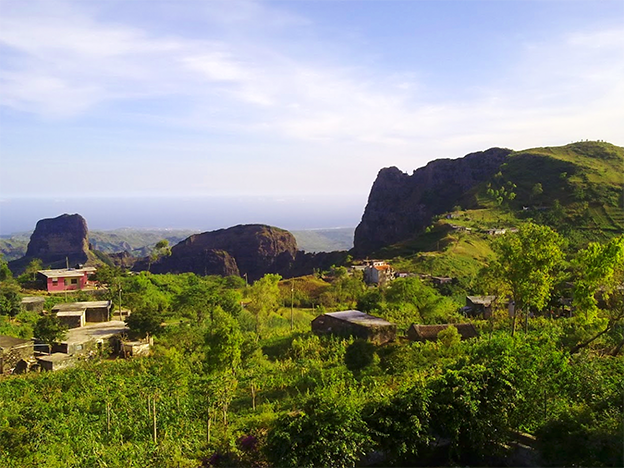


Santiago Island is the largest and most populous island of Cape Verde, located in the southern (Sotavento) group of the archipelago in the central Atlantic Ocean. Covering approximately 991 km², it is often referred to as the “cradle island” of Cape Verde because it was the first island to be settled by the Portuguese. The landscape is diverse, featuring rugged mountains, fertile valleys, coastal plains, and sandy beaches. Its highest point is Pico de Antónia, which rises to 1,392 metres above sea level.
Santiago has a population of around 300,000 people, accounting for more than half of Cape Verde’s total population. The island is home to Praia, the national capital and largest city, which serves as the country’s political, economic, and cultural centre. Other important towns include Assomada, Tarrafal, and Cidade Velha, the latter being a UNESCO World Heritage Site and the first European colonial settlement in the tropics.
The island’s economy is based on agriculture, commerce, services, government administration, fishing, and tourism. Santiago is Cape Verde’s most important agricultural region, producing crops such as maize, beans, sugar cane, fruits, and vegetables. As the location of the capital city and the country’s main international airport, it is also a major hub for trade, business, and transport.
For visitors, Santiago offers a rich blend of history, culture, and natural beauty. Key attractions include the historic streets and fortress of Cidade Velha, the beaches of Tarrafal, the scenic Serra Malagueta mountains, vibrant markets in Praia and Assomada, and opportunities to experience traditional Cape Verdean music and culture. With its combination of historical significance, dramatic landscapes, and lively local traditions, Santiago provides one of the most complete and authentic experiences in Cape Verde.